Quick verdict
The lowest-risk bathroom storage is often the storage you already have: the shower door, the back of the bathroom door, a freestanding corner, or one light hook outside the direct spray zone. Start there before adding adhesive shelves. No-drill does not mean damage-free; check the lease, surface condition, product instructions, and removal plan before buying.
This page targets searches such as how to add storage to an apartment bathroom without drilling, no drill bathroom storage rental, tiny rental bathroom storage, and bathroom organizer for renters.
The minimum no-drill bathroom storage kit
Buy for the actual gap in your bathroom, not for a large organizing project. The three products below cover a light shower caddy, an over-door option, and one towel or robe hook. A freestanding tray or tension-pole caddy can be a better fourth piece when the room has floor or ceiling clearance.
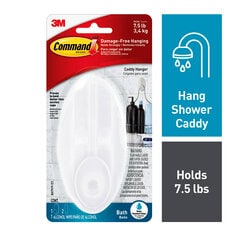
Command Bath Shower Caddy Hanger for a light, measured shower-caddy setup
Use this only on a compatible smooth surface and with a caddy that fits the hanger. Follow the strip, set-time, and load instructions exactly, keep bottles from pooling water, and do not treat the hanger as a wall shelf.
View on Amazon
Zenna Home over-the-shower caddy for using door space without wall holes
Measure the door thickness, top clearance, shower curtain or glass-door path, and trim before ordering. The bathroom door or shower door must still close normally, and the caddy should come off before move-out if it could mark the finish.
View on Amazon
Command jumbo utility hook for one light robe or towel outside the wet zone
Use one hook for a light, dry item on a compatible surface. Keep it away from direct spray, steam buildup, and a door edge that can catch the item. Respect the stated load limit and plan slow removal.
View on AmazonChoose the lowest-risk storage move
| Bathroom problem | Lowest-risk first move | Watch out for |
|---|---|---|
| Bottles on the shower floor | Measure an over-door caddy or use a compatible caddy hanger on a smooth, dry surface. | Door clearance, rust, pooled water, and a load that is too heavy for the hanger. |
| No place for a towel or robe | Use one light hook outside the direct spray zone, or a freestanding towel stand. | Steam, wet fabric, fresh paint, rough tile, and a hook placed where the door can hit it. |
| Tiny sink with no counter | Use one small freestanding tray or organizer and keep the basin edge clear. | Blocking the faucet, drain, ventilation, medicine access, or a cleaning path. |
| Suction cups keep falling | Stop adding weight and switch to a measured over-door or freestanding solution. | Porous tile, grout lines, condensation, and assuming suction is a permanent mount. |
| Bathroom door will not close | Do not use an over-door caddy; choose a freestanding organizer or ask about approved hardware. | Pinched towels, damaged trim, a blocked exit, or a latch that no longer engages. |
Install in this order
- Measure before shopping. Check the door or shower-door thickness, top clearance, trim, curtain path, and the distance from wet spray.
- Inspect the surface. Adhesive needs a compatible, sound, clean, dry surface. Do not mount over loose paint, wallpaper, grout, or visible moisture.
- Keep the load light. Start with only the items you need, leave an air gap, and do not use a caddy as a step, handhold, or shelf for heavy bottles.
- Follow the set time. If the product uses adhesive, install it exactly as directed and wait before loading it. Do not improvise with extra strips.
- Test the room. Open and close the door, run the shower briefly, check drainage, and confirm that the caddy does not swing into glass, tile, or a person.
- Photograph the condition. Keep a move-in or installation photo and check the mount after the first day, after a week, and whenever the bathroom becomes unusually humid.
What to skip
- Giant adhesive shelves: a humid bathroom and a heavy collection of bottles create more failure risk than a small caddy.
- Rough or porous tile: adhesive, suction, and clean removal are less predictable over grout and textured surfaces.
- Overloaded shower rods: do not hang storage from a curtain rod unless the rod and product are specifically designed for it.
- Door caddies that scrape: a small storage gain is not worth damaged trim, a door that will not latch, or a blocked exit.
- Rust-prone hardware: choose bathroom-suitable materials and remove anything that begins to stain or shed.
Humidity and renter notes
Bathrooms are a difficult environment for any mount. Condensation, direct spray, soap residue, and repeated loading can change how well a hook or caddy stays in place. If an adhesive starts lifting, a hook tilts, a caddy swings, or a door rubs, unload it and stop using that position. Do not cover vents, hide a leak, block access to a shutoff, or place storage where it creates a trip or exit hazard.
Report leaks, mold, loose tile, damaged grout, or a failing exhaust fan to the landlord or maintenance team. Do not use storage to conceal a building problem, and ask before adding hardware to tile, a door, or a shared bathroom surface.
FAQ
How do I add storage to an apartment bathroom without drilling?
Use existing door or shower-door space, one light hook, or a freestanding organizer after measuring the room. For adhesive products, confirm that the surface is compatible, dry, and sound, then follow the full installation and removal instructions.
Is no-drill bathroom storage damage-free?
No. It can be lower risk than drilling, but humidity, surface condition, load, installation, and removal can still cause marks, pulled paint, residue, rust, or damaged trim.
What bathroom storage works in a small rental?
Start with a measured over-door caddy, a light hook outside the wet zone, or one small freestanding tray. Choose only what fits without blocking the door, vent, drain, or cleaning path.
How do I stop a shower caddy from falling?
Reduce the load, dry the items and surface, check that the caddy is installed on a compatible location, and follow the product instructions. If it still shifts or the surface is rough or wet, switch to a freestanding or correctly fitted over-door option.